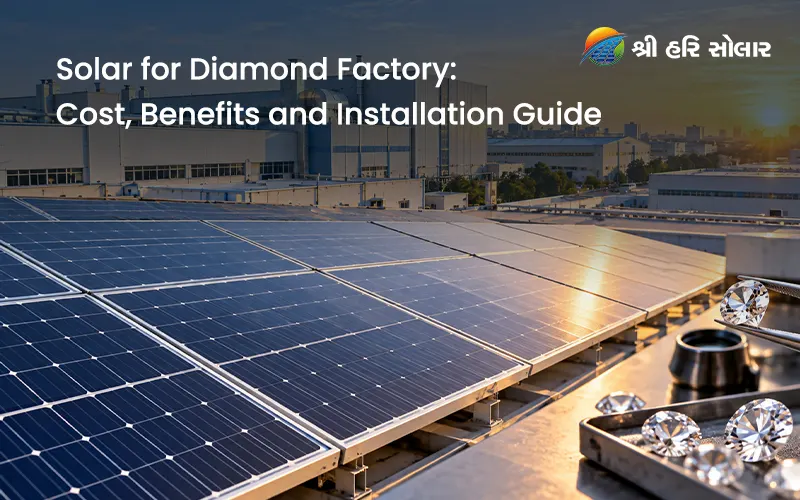
Can a Diamond Factory in Surat reduce its electricity bill with rooftop solar? The answer depends on how much electricity the unit uses during the day, how much roof space is available, and the cost of installing the system. A well-sized solar plant can help offset grid electricity use during working hours. Before making a decision, factory owners should assess their machinery load, roof condition, and electricity bills.
At Shree Hari Solar, we provide solar EPC services for residential, commercial and industrial projects. We help customers assess their site, plan the system, install the equipment and test it before use. In this guide, we explain how solar can suit diamond factories in Surat, how to estimate the required capacity, what affects the installation cost, and which checks to complete before starting a project.
Why Diamond Factories in Surat Should Consider Solar
Surat has a large diamond cutting and polishing sector, with units that use electricity for machinery, lighting, cooling and other daily tasks. Industrial solar systems can help factories reduce their dependence on grid electricity. Rooftop solar can help meet part of this demand by generating electricity from sunlight. The actual benefit depends on the factory’s load pattern, roof space and local electricity tariff.
Solar can be a useful option for units that use a large share of their electricity during daylight hours. The system can supply electricity to the factory while the sun is shining, which may reduce the amount drawn from the grid. A site with limited roof space may need a smaller plant, so it may not cover all daytime use. We recommend checking electricity bills and operating hours before estimating the likely savings.
Electricity use in diamond cutting and polishing units
Diamond factories use different types of equipment, and each unit has its own load pattern. Cutting and polishing machines may run for long periods, while laser equipment, lighting, computers, air conditioning and ventilation add to the total demand. Some units work in shifts, while others operate for a shorter part of the day. These differences affect the amount of solar electricity a factory can use directly.
A factory owner should review the load of each main machine and the hours it runs. The electricity bill shows total use, but it does not always show how much electricity is used during sunlight hours. If detailed load data is available, it can help the installer plan the system more accurately. This step can prevent the factory from installing a plant that is too large or too small for its needs.
How daytime solar generation can reduce grid use
Solar panels generate electricity during daylight, with output changing based on sunlight, heat, shade and weather. When the factory is using electricity at the same time, the solar system can supply part of that demand. Any shortfall must come from the grid or another approved source. If the system generates more than the factory uses at that moment, the treatment of surplus electricity depends on the applicable grid rules and connection arrangement.
The best result comes from matching solar generation with the factory’s daytime use. For example, a unit that runs its machines through most daylight hours may use a larger share of the electricity generated by its rooftop system. A unit that closes early may have more surplus generation during some hours. The installer should assess the daily load pattern before estimating savings.
How Solar Works for a Diamond Factory
An industrial rooftop solar system uses panels to generate direct current electricity. An inverter converts this into alternating current that can be used by suitable factory equipment. The system also needs mounting structures, cables, protection devices, earthing and the right grid connection. Each part must suit the factory’s electrical setup and site conditions.
The system type depends on how the factory uses electricity and what it needs during a grid outage. An on-grid system is often considered for sites that use grid electricity and want to offset daytime use. A hybrid system may be considered if backup is required, but the cost and backup capacity depend on the battery and equipment selected. The right setup should follow a site review rather than a general rule.
On-grid solar systems
An on-grid system works alongside the local electricity grid. During daylight, the solar plant can supply electricity to the factory’s loads, reducing the amount drawn from the grid when generation is available. At times when solar output is low, the factory draws the balance from the grid. Most standard on-grid systems shut down during a grid outage for safety unless an approved backup setup is included.
This type of system may suit a diamond factory that runs machines during the day and has a reliable grid connection. The final capacity depends on the factory’s daytime demand, roof area, connection limits and applicable regulations. Before installation, the owner should confirm the current process with the relevant electricity distribution company. The installer should also explain how surplus generation is handled under the approved arrangement.
Hybrid systems and backup needs
A hybrid system can combine solar panels, grid supply and a battery. It may help supply selected loads during a grid outage if the system has the required backup features. However, not every machine should be connected to backup, and a battery must be sized for the load and required backup time. This can add to the initial cost.
For a diamond unit, the owner should first identify which equipment must keep running during an outage. Lighting, computers or selected control equipment may need a different backup setup from large polishing machines. Ask for a clear list of the loads the battery can support and for how long. Do not assume that a standard rooftop solar system will keep the entire factory running during a grid failure.
How Much Solar Capacity Does a Diamond Factory Need?
The required solar capacity depends on the factory’s electricity use, roof space, working hours and connection limits. A monthly bill is a useful starting point, but it should not be the only factor used to size the plant. The installer should review daytime consumption and assess how much of the generated electricity the factory can use. A roof survey is also needed to check the usable area and any structural limits.
A factory with high daytime demand may be able to use more solar generation directly. A smaller unit with a limited terrace may need a lower-capacity system, even if its electricity bill is high. Shade from nearby buildings, water tanks and other structures can also affect the layout. The final size should be based on the actual site rather than a standard estimate.
Use electricity bills and daytime load data
Before asking for a quote, collect recent electricity bills and note the factory’s working hours. If possible, record the rated load and daily operating time of the main machines. The installer can use these details to estimate the daytime demand and compare it with expected solar generation. This provides a better basis for deciding the plant capacity.
The table below lists the main details to prepare before a site visit.
| Information | Why it matters |
|---|---|
| Recent electricity bills | Shows total use and the billed tariff |
| Working hours | Helps estimate how much solar output can be used during the day |
| Main machine list | Helps assess the factory load |
| Roof measurements | Helps estimate the area available for panels |
| Roof type and condition | Helps assess mounting needs and structural checks |
| Electricity connection details | Helps review the applicable connection limits and process |
These details do not replace a site survey, but they can make the first assessment more useful. If the factory shares a building with other units, clarify which roof areas can be used and who has permission to approve the work. The owner should also provide access to the electrical panel and roof for inspection. A written assessment can then set out the proposed capacity and main equipment.
Estimate usable roof area
Not every part of a roof can hold solar panels. Water tanks, staircases, lift rooms, shade, access paths and safety clearances reduce the usable area. The roof must also be able to support the proposed mounting structure and equipment. A structural check is needed before installation, especially on older buildings or roofs with signs of damage.
A site survey should include roof measurements, shade checks and a review of safe access. The panel layout must allow for maintenance and follow the required clearances. If the roof is shared or rented, written consent may be needed before work begins. These checks help set a realistic limit on the system size.
Solar Installation Cost for a Diamond Factory in Surat
The cost of industrial rooftop solar depends on system capacity, panel model, inverter type, mounting structure, cable length and site conditions. The final quote may also include electrical work, safety equipment, labour, testing and grid connection tasks. Two factories with the same planned capacity can receive different quotes if their roofs or electrical setups differ. For this reason, an online price per kilowatt should be treated as a rough guide, not a final offer.
We recommend asking for an itemised quote that lists the main equipment and work. Compare quotes for the same capacity and similar specifications, then check what each one includes. A low price may leave out important items or use different equipment. Ask the installer to explain any difference before paying an advance.
Main factors that affect project cost
The first factor is the planned system capacity. A larger system needs more panels and may need different inverter or electrical equipment. The roof structure can also affect cost, since some sites need extra mounting work or repairs before installation. Long cable runs, difficult roof access and changes to the existing electrical setup can add to the project cost.
Panel and inverter specifications also affect the quote. Warranty terms, equipment quality and the scope of installation should be reviewed along with the price. Ask whether taxes, transport, installation, testing and grid-related work are included. A clear quote makes it easier to compare the full project cost rather than just the panel price.
What an industrial solar quote should include
Before approving the project, check that the quote lists the main items and the work to be done. This helps you see if two offers cover the same scope. It also gives you a written record of the equipment and service promised. Use the following checklist when reviewing a quote.
| Quote item | What to check |
|---|---|
| Solar panels | Brand, model, rated output and warranty |
| Inverter | Type, capacity and warranty |
| Mounting structure | Material, roof fit and corrosion protection |
| Cables and connectors | Suitable ratings and quality |
| Safety equipment | Earthing, isolators and surge protection |
| Installation | Labour, testing and handover |
| Grid connection work | Applicable approvals and metering tasks |
| Service terms | Contact details and warranty claim process |
A quote should also state the expected generation estimate and the assumptions used to calculate it. Ask how the system will be monitored and what records you will receive after installation. Keep copies of the invoice, datasheets, serial numbers and warranty papers. These records can help if you need service later.
CAPEX and third-party ownership options
Under a CAPEX model, the factory pays for the solar plant and owns the installed equipment, subject to the project agreement. The owner is responsible for the investment and receives the benefit of the electricity generated under the applicable arrangement. The owner should also understand the expected maintenance needs and warranty process. The financial result depends on the installed cost, generation, tariff and how much solar electricity is used on site.
Some businesses may also assess third-party ownership or a solar service agreement, subject to availability and contract terms. Under such models, the payment structure and responsibility for equipment can differ from a direct purchase. Review the contract, tariff, term, service duties and exit conditions before signing. A finance choice should be based on the factory’s cash flow and long-term plans.
How Much Can a Diamond Factory Save With Solar?
Solar savings depend on how much electricity the system generates and how much of that electricity the factory uses. The value of each unit also depends on the tariff and the rules for surplus generation. A system that generates a lot of electricity when the factory is not using it may not provide the same bill reduction as one that matches the daytime load. A proper estimate should use the factory’s actual bills and expected generation.
For this reason, avoid relying on a fixed savings percentage for every diamond factory in Surat. The results can differ based on the roof, season, machine schedule, system size and tariff. The installer should show the assumptions behind any savings estimate. This helps the owner assess the likely result without relying on a promise.
A sample electricity savings calculation
The following example shows how to estimate the value of solar electricity used by a factory. These figures are for illustration only and are not a quote or a forecast for a specific diamond unit. Suppose a solar system generates 100,000 units of electricity in a year, and the factory uses 80% of that generation directly. If the assumed value of each unit offset is ₹8, the estimated value of the electricity used on site is ₹6,40,000 per year.
| Item | Illustrative value |
|---|---|
| Annual solar generation | 100,000 units |
| Share used directly by the factory | 80% |
| Solar units used on site | 80,000 units |
| Assumed value per unit | ₹8 |
| Estimated annual value of on-site use | ₹6,40,000 |
This calculation does not include the system cost, maintenance, finance charges, tariff changes or any payment for surplus electricity. It also assumes the factory can use the stated share of solar generation when it is available. The actual value must be calculated from the site’s expected generation and billing rules. A site-specific assessment is needed before estimating payback.
Factors that affect payback
Payback is the time it takes for the financial benefit to recover the initial cost, based on the assumptions used. A lower installation cost can shorten the payback period, while lower generation or lower self-use can extend it. Maintenance costs, finance charges and changes to the tariff can also affect the result. The estimate should show these inputs rather than rely on a single headline figure.
Ask the installer to share the estimated annual generation, the expected share used on site, the assumed unit value and the total project cost. Confirm if the estimate includes any costs that may arise after installation. Review the assumptions if the factory changes its working hours or production schedule. This gives the owner a clearer basis for comparing project offers.
Roof and Electrical Checks Before Solar Installation
A rooftop solar project needs more than enough space for panels. The building must be suitable for the added load, and the electrical setup must be reviewed before the system is connected. The layout should also allow safe access for cleaning and maintenance. A proper site review helps identify work that must be completed before installation.
Roof strength and mounting structure
The roof should be checked for cracks, leaks, corrosion and other signs of damage. A qualified professional should assess whether it can support the proposed mounting structure and solar modules. The mounting system must suit the roof type and local weather conditions. Any needed repairs should be planned before panels are installed.
Earthing, electrical protection and inverter selection
The system should include suitable earthing, isolators, surge protection and correctly rated cables. The inverter must match the panel layout and the factory’s electrical requirements. The installer should also review the existing distribution board and the point where the solar system will connect. Testing and documentation should be completed before the system is handed over.
Shared terraces and rented premises
Some diamond units operate in rented buildings or share roof space with other businesses. In these cases, the factory should confirm the right to use the roof and obtain written consent from the owner where required. The agreement should state who owns the equipment and who can access the roof for service. It should also cover what happens to the system if the factory moves out.
Solar Installation Process for Diamond Factories in Surat
A clear process helps the factory plan the work with less disruption to daily operations. The first step is to review electricity bills, working hours and the site. Next, the installer prepares a system layout and quote based on the roof, electrical setup and expected use. After the required approvals and checks, installation and testing can take place.
The main steps are:
- Initial review: Share recent electricity bills, operating hours and factory details.
- Site survey: Check roof area, shade, structure and electrical equipment.
- System proposal: Review capacity, equipment, expected generation and cost.
- Approvals: Confirm the current grid connection and metering process with the relevant authority.
- Installation: Fit the panels, mounting structure, inverter and safety equipment.
- Testing and handover: Check the system, provide records and explain monitoring and service.
The installation plan should account for factory access and work hours. Ask the installer how the work may affect the site and what safety measures will be used. Confirm the expected schedule and the documents you will receive after handover. Keep a copy of the final system layout and equipment list for future reference.
Get a Solar Assessment for Your Diamond Factory in Surat
Solar can help a diamond factory reduce grid electricity use during working hours, but the result depends on the site’s roof, load pattern, system cost and tariff. Before choosing a plant, compare the expected generation with the factory’s daytime demand and review the full installation quote. Check the panel and inverter specifications, warranty terms, safety equipment and service process. A site-specific assessment is the right next step before making an investment.
Shree Hari Solar provides solar EPC services for residential, commercial and industrial projects across Surat and South Gujarat. Since 2018, we have helped customers assess their site needs and plan solar installations. If you own or manage a diamond cutting or polishing unit, contact our team to discuss your electricity use, roof area and project requirements.
Frequently Asked Questions
Is solar suitable for a diamond polishing factory?
Solar can suit a diamond polishing factory if the site has usable roof space and the system matches its daytime electricity use. The owner should assess the machine load, working hours, roof condition and grid connection. The likely savings depend on the amount of solar electricity used on site. A site survey can help determine a suitable system size.
How much roof area is needed for a solar plant?
The area depends on the system capacity, panel dimensions, shade, roof layout and access requirements. The usable area may be lower than the total roof size because tanks, staircases and safety paths take up space. A roof survey is needed before confirming the number of panels. Structural suitability should also be checked.
Can solar run diamond polishing machines?
Solar can supply electricity to suitable factory loads while the system is generating, provided the inverter and electrical setup are correctly sized. The system must be assessed against the machines’ load and operating pattern. During periods when solar generation is lower than demand, the factory may need grid electricity or an approved backup source. The final setup should follow a technical assessment.
Can a rented factory install rooftop solar?
It may be possible if the factory has permission to use the roof and meets the applicable connection requirements. The tenant and property owner should agree in writing on ownership, access, maintenance and what happens at the end of the lease. Shared buildings may need extra planning. Confirm the required documents before starting work.
How much does industrial solar cost in Surat?
The cost depends on the planned capacity, panel and inverter models, roof structure, cable runs and electrical work. A reliable quote should follow a site survey and list the equipment and services included. Online estimates can provide a starting point, but they cannot confirm the price for a specific factory. Request an itemised quote to compare offers fairly.
Does a diamond factory qualify for residential solar subsidy?
Residential rooftop subsidy schemes have specific eligibility rules and are not automatically available to commercial or industrial factories. Do not assume that a business unit qualifies under a residential scheme. Check the current rules on the official PM Surya Ghar portal and confirm the process with the relevant electricity distribution company. The correct route depends on the connection type and project details.