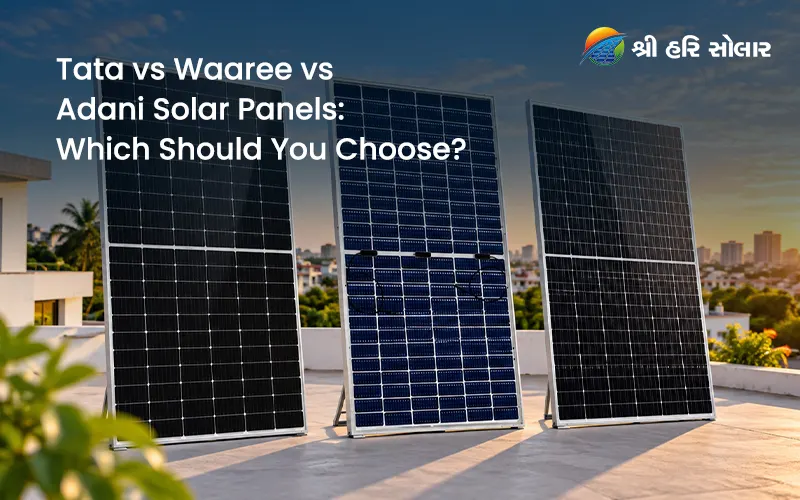
Choosing between Tata, Waaree and Adani solar panels can be hard when all three offer different models, technologies and warranty terms. The right choice depends on your roof size, daily electricity use, budget and long-term needs. For homeowners in Surat, panel performance in hot weather is also an important factor. We should compare the actual panel model, not just the brand name.
At Shree Hari Solar, we help homeowners and businesses assess their solar needs before choosing a system. In this guide, we compare Tata, Waaree and Adani solar panels by technology, efficiency, heat performance, price factors and warranty terms. We also explain what to check before installing rooftop solar in Surat.
Tata vs Waaree vs Adani Solar Panels: Quick Comparison
Tata, Waaree and Adani offer solar modules for different uses and system sizes. Their product ranges include different cell types, wattage ratings and construction methods. This means a fair comparison needs the exact model number and its official datasheet. The table below gives a starting point for comparing their products.
| Comparison factor | Tata Solar | Waaree Solar | Adani Solar |
|---|---|---|---|
| Panel options | Mono PERC and TOPCon models | Mono PERC and N-type TOPCon models | Mono PERC and N-type TOPCon models |
| Efficiency | Depends on the selected model | Depends on the selected model | Depends on the selected model |
| Heat performance | Check the model’s temperature coefficient | Check the model’s temperature coefficient | Check the model’s temperature coefficient |
| Product warranty | Confirm the exact model’s warranty | Confirm the exact model’s warranty | Confirm the exact model’s warranty |
| Output warranty | Check the official warranty document | Check the official warranty document | Check the official warranty document |
| Price | Varies by model and supply terms | Varies by model and supply terms | Varies by model and supply terms |
| Suitable use | Select based on roof and system needs | Select based on roof and system needs | Select based on roof and system needs |
Our advice: Do not select a panel based only on its brand, wattage or quoted price. Compare efficiency, temperature coefficient, warranty, approved model status and the full installation quote. These details help you assess the value of the system over its expected service life.
About Tata Power Solar, Waaree Energies and Adani Solar
Each manufacturer offers a range of solar modules. A brand name alone does not tell us how a specific panel will perform on a given roof. We should check the model’s technical data, warranty terms and suitability for the planned system. Here are the main points to review for each brand.
Tata Power Solar
Tata Power Solar offers solar modules for different applications, including rooftop and larger solar systems. Its published product range includes Mono PERC and TOPCon modules. For example, its TP600LG10TB datasheet lists rated outputs from 570 W to 600 W and module efficiency from 20.47% to 21.54%, depending on the model variant. The same datasheet lists a temperature coefficient of maximum power of -0.36% per °C. These figures apply to that product range, not to every Tata panel.
Before selecting a Tata panel, check its current model number, rated output, warranty and availability for your system. Also confirm that the module suits the inverter and electrical layout. The highest wattage model may not be the right fit for every roof. A full system assessment helps match the panel to your needs.
Waaree Energies
Waaree offers Mono PERC and N-type TOPCon modules in different wattage ranges. Its official warranty document for the Elite N-type TOPCon series states a 12-year product warranty and a 30-year power output warranty, subject to the terms in that document. It also sets out the expected output level over time. These terms apply to the listed Elite TOPCon models, not to every module sold under the Waaree name. Read the official Waaree TOPCon warranty document.
When comparing a Waaree panel, check whether the quote names the exact model and cell technology. Review the product warranty separately from the power output warranty. Also ask for the current datasheet and confirm that the module is suitable for your roof and inverter. These checks help you compare the offer with other panels on equal terms.
Adani Solar
Adani Solar offers Mono PERC and N-type TOPCon modules. Its Shine TOPCon range includes modules with a stated efficiency of up to 22.3%, though the exact efficiency depends on the model. The company also lists a 30-year power warranty and an annual degradation figure for its TOPCon range. Check the current datasheet and warranty document before applying these figures to a particular panel.
When reviewing an Adani panel, check its rated wattage, efficiency, temperature coefficient and warranty terms. Confirm whether the quoted model is available for your intended system. A panel with a higher rated output can reduce the number of modules needed, but roof layout and electrical design still matter. The final choice should be based on the full system requirements.
Solar Panel Efficiency and Technology Comparison
Solar panel efficiency tells us how well a panel turns sunlight into electricity for its surface area. A panel with higher efficiency can produce more rated power in a similar area, if the other conditions are comparable. This can matter on homes with limited roof space. Still, efficiency alone does not tell us how much electricity the full system will generate each day.
Two common cell technologies are Mono PERC and N-type TOPCon. Both are used in solar modules, but their performance and cost depend on the specific product. When comparing these technologies, use the current datasheets rather than assuming that every panel in one category performs the same way. The right choice also depends on the system budget and roof conditions.
Mono PERC vs N-type TOPCon
Mono PERC panels use a cell structure that helps capture more light and improve cell performance. N-type TOPCon panels use a different cell design and may offer high efficiency and low annual output loss in specific product ranges. These benefits vary by model and test conditions. We should compare the figures on the actual datasheets before deciding which panel offers better value.
| Factor | Mono PERC | N-type TOPCon |
|---|---|---|
| Cell technology | Passivated emitter and rear contact | Tunnel oxide passivated contact |
| Efficiency | Depends on the model | Depends on the model |
| Output loss over time | Check the product warranty | Check the product warranty |
| Initial cost | Depends on brand and supply | Depends on brand and supply |
| Buying point | Compare price and rated output | Compare efficiency, warranty and price |
TOPCon can be a suitable choice for buyers who want a newer cell technology, but it should not be selected on that basis alone. The price difference must be weighed against expected energy output and the roof area available. A well-matched Mono PERC system may still meet a home’s needs. Ask for a system-level estimate before making a decision.
Which specifications matter for a Surat rooftop?
For a home in Surat, start with roof space, shade, daily electricity use and the direction of the panels. Next, check module efficiency and temperature coefficient. Look at the panel’s dimensions and weight, since these affect how many modules can fit and how the mounting structure must be planned. The inverter and electrical design must also match the selected panels.
A higher wattage rating does not always mean higher efficiency. A larger panel may produce more watts because it has a larger surface area. Compare module efficiency as well as rated output when roof space is limited. Ask the installer to show how the selected panels fit on your roof plan.
Which Solar Panel Performs Better in Hot Weather?
Solar panels are tested under set conditions, but their output changes with sunlight, cell temperature, shade and other factors. In Surat, roof surfaces can become hot during the summer, so temperature performance deserves attention. The temperature coefficient of maximum power tells us how panel output changes as cell temperature rises above the test reference of 25°C. A less negative figure generally means a smaller drop in output as the panel gets hotter.
For example, a panel with a temperature coefficient of -0.36% per °C has an estimated output change of -0.36% for each degree Celsius above the reference temperature, under the coefficient’s stated conditions. This is a technical estimate, not a promise of actual daily output. Real results also depend on sunlight, ventilation, shade and system design. Compare the figures from each panel’s own datasheet.
How roof heat affects solar output
Heat can lower the output of a solar panel, even on a sunny day. A panel’s cell temperature can be higher than the surrounding air temperature, especially when airflow beneath the panel is poor. The mounting height and ventilation can therefore affect operating conditions. The inverter, cables and other system parts also need to be selected and installed correctly.
For a rooftop system in Surat, we recommend checking these points before installation:
- Keep enough space for air to move beneath the panels, as the approved mounting plan allows.
- Avoid placing panels in areas that receive shade from tanks, walls or nearby buildings.
- Use a mounting structure suited to the roof and local weather conditions.
- Check cable size, connectors, earthing and protection devices.
- Plan safe access for inspection and cleaning.
No single brand should be called the winner in hot weather without comparing its exact model data under the same test conditions. Ask for the temperature coefficient and expected system output, rather than relying on a general claim about heat performance.
Tata vs Waaree vs Adani Solar Panel Price
Solar panel prices vary by model, wattage, cell technology, order size and supply terms. The total cost of a rooftop solar system also includes more than the panels. The inverter, mounting structure, cables, protection devices, labour and site conditions can all affect the final quote. For this reason, a panel price alone cannot tell us which complete system offers better value.
For an accurate comparison, ask each supplier to quote the same system capacity and list the panel model number. Check whether the price includes GST, transport, installation and commissioning. Confirm the warranty terms and any charges for later service. If a quote is much lower than the others, check what has been left out before making a choice.
Panel price vs complete rooftop system cost
A solar quote should list the main items and the work included. Use the table below when comparing offers from installers in Surat. It helps you check if the quotes cover the same equipment and service. Ask for any unclear item to be explained in writing.
| Quote item | What to check |
|---|---|
| Solar panels | Brand, model, wattage, quantity and warranty |
| Inverter | Brand, capacity, type and warranty |
| Mounting structure | Material, height, roof fit and finish |
| DC and AC cables | Cable size, quality and route |
| Safety equipment | Isolators, surge protection and earthing |
| Installation | Labour, testing and commissioning |
| Grid connection | Metering and required approval work |
| After-sales support | Contact process and service terms |
Do not compare one quote for panels only with another quote for a complete installed system. The cheaper offer may not include the same equipment or service. Ask for a written, itemised quote before paying an advance. This makes it easier to compare the total cost and the support offered.
What changes the final installation quote?
The cost depends on the system size, roof type, access, panel model and electrical work required. A flat roof may need a different structure from a sloped roof. Long cable runs or changes to the existing electrical setup may add cost. The final quote should reflect a site check rather than a guess based only on monthly electricity use.
For a useful estimate, keep a recent electricity bill ready and share details of the roof. The installer can use this information to assess the likely system size and layout. Ask how much energy the system is expected to generate and what assumptions were used. This helps set realistic expectations for savings.
Warranty and Long-Term Performance Comparison
Solar panel warranties usually cover two different areas. The product warranty covers certain defects in materials or workmanship, subject to its terms. The power output warranty sets a minimum output level over a stated period. These are not the same, so check both before selecting a panel.
Warranty length alone does not settle the comparison. Read the conditions, exclusions, claim process and start date. Confirm who you should contact if a panel has a fault and what documents are required. Keep the invoice, serial numbers, datasheet and warranty document in a safe place.
Product warranty
A product warranty may cover faults in materials or workmanship, but its scope depends on the manufacturer’s written terms. It may not cover damage caused by poor installation, misuse or events excluded in the warranty. Ask for the warranty document for the exact panel model before purchase. Do not rely only on a salesperson’s verbal statement.
Also confirm how a claim is handled in your area. Ask whether the installer will help with the claim and if any transport or labour costs may apply. Keep a copy of the final bill and installation records. These steps can help if you need support later.
Performance warranty and annual degradation
Solar panels lose some output over time. The power output warranty states how much output the manufacturer expects the panel to retain after set periods. Annual degradation figures vary by model and should be read from the official warranty. Compare the guaranteed output at the end of the warranty period, not just the number of years stated.
A longer warranty does not mean a panel will always produce more electricity than another model. Actual output depends on the site, weather, shade, cleaning and system condition. The warranty also uses defined test conditions to assess output. Check the terms so you know what is covered and how output is measured.
How to check warranty claim terms
Before buying, ask for clear answers to these questions:
- How many years does the product warranty cover?
- How many years does the power output warranty cover?
- What output level is guaranteed at the end of that period?
- Who handles the claim, and what documents are needed?
- Are labour, removal, transport or replacement costs covered?
- Does the warranty require installation by an approved installer?
Keep the answers with the written quote and final invoice. Make sure the panel model on the bill matches the model installed on your roof. This is a simple way to reduce confusion if a claim is needed. Always refer to the official warranty document for the final terms.
Which Brand Is Suitable for Your Home?
There is no single panel brand that suits every home. The right option depends on roof space, electricity use, budget, model availability and the terms offered. A homeowner with a small roof may value higher module efficiency, while another may focus on the total installed cost. The key is to compare models against your actual needs.
Small rooftop with limited space
If your roof has limited usable space, compare panel efficiency, dimensions and rated output. Higher efficiency may help fit more system capacity into the available area. Still, leave room for safe access and follow the mounting and electrical design. Ask for a roof layout that shows the planned panel positions.
Home with high electricity use
If your household uses a lot of electricity, start with your bills and usage pattern. The system size should match your daytime use, roof area and the local grid connection rules. Compare the expected energy output of each proposed system, not just the panel wattage. A well-sized system can be more useful than buying the highest-wattage panels available.
Buyer focused on budget
If the budget is limited, compare the full installed price and the equipment included. A lower panel price may not mean a lower long-term cost if the quote uses different equipment or leaves out key work. Check the warranty, inverter, mounting structure and safety parts. Choose a quote that explains the costs clearly.
Buyer focused on long-term service
If after-sales support matters most, ask how the installer handles faults, inspections and warranty claims. Confirm the service contact and expected response process in writing. Keep records of the installed equipment and commissioning checks. Good documentation can make future service easier.
How to Compare Solar Panel Quotes in Surat
Before choosing a rooftop solar system, compare the quotes using the same checklist. This helps you see the differences in equipment, installation work and warranty terms. It also helps avoid choosing a system based only on the lowest price. Use these steps before making the final decision.
Check the exact model number and datasheet
Ask for the manufacturer’s datasheet for every panel in the quote. Check the rated output, efficiency, temperature coefficient, dimensions and warranty. Verify that the model number on the quote matches the datasheet. If two panels use different technologies or sizes, note that before comparing their figures.
Compare the inverter, mounting structure and wiring
Panels are only one part of a solar system. The inverter must match the panel layout and system capacity, while the mounting structure must suit the roof. Check the cable specifications, earthing and safety equipment. Ask the installer to list all key parts in the written quote.
Verify approvals, warranty and local support
For residential rooftop systems that use government subsidy support, check the current rules and eligible vendor process before paying. The official PM Surya Ghar portal provides scheme information. The Ministry of New and Renewable Energy publishes current notices, including the Approved List of Models and Manufacturers (ALMM). Requirements can change, so confirm the rules that apply to your project at the time of application.
For Gujarat, the rooftop solar portal lists the relevant DISCOM links for subsidy applications, including DGVCL and Torrent Power in Surat. Confirm the correct process for your electricity connection before installation. Also ask the installer about commissioning records, meter requirements and service support. These checks help you make a more informed choice.
Final Verdict: Which Solar Panel Should You Choose?
Tata, Waaree and Adani each offer solar modules across different product ranges. The right choice comes down to the exact model, its efficiency, heat performance, warranty, price and suitability for your roof. We recommend comparing official datasheets and written quotes rather than relying on brand reputation alone. This approach helps you judge the full system, not just the panel.
At Shree Hari Solar, we provide solar EPC services for residential, commercial and industrial projects across Surat and South Gujarat. Since 2018, our focus has been on helping customers assess their energy needs and plan suitable solar systems. If you are comparing solar panels for your home or business, speak with our team about your roof, electricity use and budget. We can help you understand the key items to check before choosing a system.
Frequently Asked Questions
Which is better, Tata, Waaree or Adani solar panels?
The right choice depends on the exact panel model, efficiency, temperature coefficient, warranty and price. Each brand offers different module types, so the brand name alone is not enough for a fair comparison. We recommend reviewing the current datasheet and warranty for the model in your quote. Compare the full installed system before making a decision.
Which brand is suitable for a home in Surat?
For a home in Surat, compare panel efficiency, temperature coefficient, roof fit and warranty. Shade, ventilation and the quality of installation also affect the system’s output. Ask for a site assessment and an estimate of expected energy generation. The suitable panel is the one that meets your roof, budget and energy needs.
Which brand offers the best value for money?
Value depends on the installed price, expected output, warranty and service terms. A lower price may be useful, but only if the quote includes the equipment and work you need. Compare itemised quotes for the same system size and similar specifications. Check the warranty terms before deciding.
Do all three brands offer TOPCon panels?
Their product ranges include TOPCon options, but availability and specifications vary by model. Check the current official product pages and datasheets before placing an order. Do not assume that every panel from a brand uses TOPCon technology. The model number should be stated in the quote.
How long is the solar panel warranty?
The warranty period depends on the product and model. Some modules have separate product and power output warranties, each with its own terms. Ask for both warranty documents and check the coverage, exclusions and claim process. Use the written manufacturer terms rather than a general brand claim.
How can we verify subsidy-related eligibility?
Start with the official PM Surya Ghar portal and check the current requirements for your residential connection. Eligibility can depend on the system, application process, approved equipment and vendor requirements. The rules for residential systems may differ from those for commercial or industrial projects. Confirm the current conditions before making a purchase.