
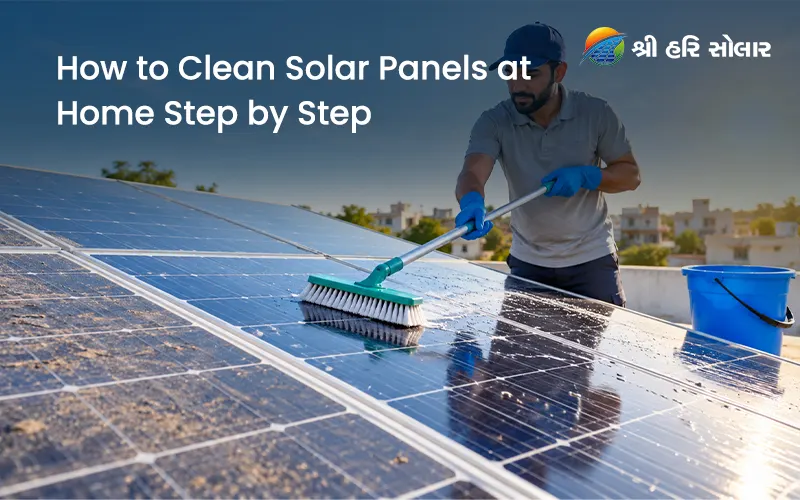
Did your solar app show fewer units this week, even on a bright day? In Surat, the most common reason is not a fault. It is a thin layer of dust, lint and pigeon droppings sitting on the glass. The good news is that you can fix it yourself in about 30 minutes. This guide shows you how to clean solar panels at home step by step, with safe tools and the right timing. We also cover the water you should use, the mistakes that can void your warranty, and how to check if the cleaning worked. Every tip comes from what we see on Surat rooftops after years of rooftop solar installation work.
Why Cleaning Your Solar Panels Matters
Solar panels make electricity from the light that passes through their glass. Anything on that glass blocks some of the light before it reaches the cells. Dust is the main culprit in Gujarat, and it builds up faster than most people think. A field study at IIT Gandhinagar, run with Duke University, measured an output loss of about 0.37% per day from dust (Solar Energy journal, 2020). Over two weeks, that adds up to roughly 5% fewer units. Over a dry month with no cleaning, the loss grows past 10%. That is money your system earns and then quietly loses on the roof.
Dirty patches cause a second problem besides lost units. When part of a panel is covered by a dropping or a leaf, those cells work harder and heat up more. Over time, these hot spots can wear out cells and shorten panel life. Cleaning is the simplest way to protect both your savings and your panels.
Does Rain Clean Solar Panels?
Heavy rain does wash panels, but light rain often makes things worse. The same IIT Gandhinagar study found that light rain and high humidity doubled the rate of dust build-up compared with dry days. Light drizzle wets the dust without washing it off, and it dries into a muddy film. Surat’s humid air has the same effect on fine dust and textile lint. So the start and end of the monsoon are often the dirtiest times for your panels. Only steady, heavy rain cleans them properly.
How Often Should You Clean Solar Panels at Home in Surat?
Most Surat homes should clean their panels every two to three weeks in the dry months. Many guides say twice a year, but that advice is written for cleaner, rainier places. Surat has dusty winters, a humid pre-monsoon, and roads full of traffic and construction. Homes near textile units or busy roads may need a weekly rinse. Use the table below as a starting point, then adjust it to what your inverter app tells you.
| Season | What lands on panels in Surat | How often to clean |
|---|---|---|
| October to February (dry winter) | Fine dust, smog, textile lint, Diwali firecracker residue | Every 2 weeks |
| March to May (hot summer) | Wind-blown dust, pigeon droppings | Every 2 to 3 weeks, early morning only |
| Early June (pre-monsoon) | Dust turned to a muddy film by humidity and light showers | Once, after the first light rains |
| Late June to September (monsoon) | Heavy rain washes most dust off | Only spot-clean droppings and leaves |
| Late September (post-monsoon) | Mud streaks and algae at the bottom edge | One full clean before winter |
A simple rule works well: if your daily units drop by 5 to 10% on clear days, it is time to clean.
What You Need Before You Start
You don’t need costly gear to clean panels well. Most of what you need is already at home or at a local hardware shop. The key is to choose soft tools and the right water.
Tools That Are Safe for Panels
- A soft brush or a microfibre mop on a long handle, so you can reach the far rows
- A bucket and a hose with a gentle spray, with any jet nozzle removed
- A rubber squeegee for drying the glass without streaks
- Two or three clean microfibre cloths
- Rubber-soled shoes and cotton gloves
- A cheap TDS meter to test your water (more on this below)
Check Your Water First
Water quality matters more than most people know. Hard water leaves white mineral spots as it dries, and those spots block light just like dust. Tata Power’s guide suggests using water under 250 ppm TDS for panel cleaning (Tata Power). Borewell water in many Surat societies is harder than that, so test it before you use it. Filtered RO drinking water is fine for the final rinse. Never use the waste water that drains out of your RO purifier. It holds the salts and minerals the filter removed, so it leaves the worst spots of all.
Temperature matters too. Adani Solar’s module manual advises using water at a temperature close to the panel’s own temperature. Cold water on hot glass can stress or crack it, which is why timing is so important.
What You Should Never Use
- Pressure washers or jet nozzles
- Detergent powder, dish soap in large amounts, vinegar or glass cleaners
- Steel wool, scrub pads or hard plastic brushes
- Hot water
- Any blade or scraper on the glass
These items can scratch the anti-reflective coating on the glass, which lowers output for good. They can also force water into seals and the junction box. If a stain will not come off with water, soak it longer instead of reaching for chemicals.
How to Clean Solar Panels at Home Step by Step
These seven steps work for most home rooftop systems in Surat. The whole job takes 20 to 40 minutes for a 3 to 5 kW system. Read all the steps once before you go up to the roof.
Step 1: Pick the Right Time
Clean your panels early in the morning, before 8 AM, or after 6 PM. At these times the glass is cool, so water will not stress it. Cool glass also dries slowly, which gives you time to squeegee before spots form. Never clean between 11 AM and 4 PM in Surat, when panels can get too hot to touch. Avoid windy days too, since fresh dust will land on the wet glass.
Step 2: Switch Off the System Safely
Panels make electricity whenever light falls on them, so treat them as live. Follow the shut-down steps your installer showed you, which are also in your system manual. On most home on-grid systems, you switch off the inverter first and then the DC isolator. Wait a minute for the inverter screen to go dark. Never open the junction box or touch loose cables. If you are unsure of the steps, call your installer before you start.
Step 3: Brush Off Dry Dust First
Use a dry soft brush or microfibre mop to sweep loose dust, leaves and lint off the glass. Work from the top edge down, so the dirt falls off the low side. This step matters because wetting thick dust turns it into mud. Mud is harder to remove and more likely to scratch. Pick off any leaves stuck at the frame edges by hand.
Step 4: Rinse With Low-Pressure Water
Spray clean water gently across each panel, again from top to bottom. Keep the flow soft, like rain, not like a jet. Don’t aim water straight at the edges, the junction box or the cable joints. Let the water run off the low edge naturally. On flat RCC roofs, check that the run-off drains away and does not pool near the inverter or cables.
Step 5: Treat Bird Droppings and Sticky Spots
Pigeon droppings dry hard in Surat’s heat and stick to the glass. Lay a wet microfibre cloth over each dropping and leave it for 10 to 15 minutes. The soaked dropping will then wipe off with light pressure. Repeat the soak if it does not come off the first time. Never scrape it with a nail, a coin or anything sharp. For oily grime from nearby kitchens or traffic, a few drops of mild liquid soap in a bucket of water is the most you should use. Rinse that spot well after.
Step 6: Final Rinse and Squeegee
Give every panel a last rinse with your cleanest water, ideally filtered RO water. Then pull a rubber squeegee down the glass in long, even strokes. Wipe the blade on a cloth after each stroke. Use a dry microfibre cloth for any drops left at the bottom frame. This stops hard-water spots from forming as the glass dries.
Step 7: Switch Back On and Check Your Output
Once the panels are dry, switch the system back on in the reverse order. Turn on the DC isolator first, then the inverter. Wait for the inverter to sync with the grid, which usually takes a few minutes. Check the screen or app for any error codes. Note the day’s units, so you can compare them with the days before cleaning.
Safety Tips for Cleaning Rooftop Panels
Most cleaning injuries come from slips and falls, not from the panels. Wet glass and a wet RCC roof are both slippery, so move slowly. Many Surat homes have low parapet walls, especially on G+2 and G+3 houses. Stay well back from the roof edge, and never lean over it to reach a panel. Raised structures that clear a water tank can put the top row above head height. In that case, use a long-handled mop from the roof floor instead of a ladder.
A few more rules keep you safe:
- Never stand, sit or kneel on a panel, even for a second. It can crack cells you cannot see.
- Don’t lean ladders against the panels or the mounting frame.
- Keep children and pets off the roof while you clean.
- Work with a second person nearby, especially on high roofs.
- Stop at once if you see cracked glass, burn marks or loose wires, and call your installer.
If you cannot reach every panel safely from the roof floor, do not take risks. Your safety is worth far more than a few days of extra units.
Common Mistakes That Can Damage Panels or Void Your Warranty
Most panel damage from cleaning is avoidable. These are the mistakes we see most often on Surat rooftops:
- Cleaning at noon. Cold water on glass baking in the sun can cause micro-cracks.
- Using a pressure washer. The jet can break seals and push water into the junction box.
- Using RO waste water or hard borewell water. It leaves white mineral spots that block light.
- Scrubbing with harsh tools. Scrub pads and stiff brushes scratch the anti-reflective coating.
- Using strong cleaners. Detergent powder, acids or solvents can damage the coating and frame seals.
- Walking on panels. Even light pressure can crack cells inside the glass.
- Cleaning only half the array. Uneven dirt across panels in one string can pull down the whole string’s output.
Panel warranties cover defects, not damage from wrong cleaning. Read the cleaning section of your Adani Solar module manual, or ask your installer for a copy of the solar insurance and warranty claims guide .
How to Tell If Your Cleaning Worked
Your inverter app is the best judge of a good clean. Before you clean, note the daily units from the last three clear, sunny days. After cleaning, compare them with the next three clear days. Skip cloudy or hazy days, since weather changes output more than dust does. A clear jump in units means the dust was costing you money. If the numbers barely change, your panels were not very dirty, and you can clean less often.
Watch for the opposite signal too. If output stays low after a good clean on sunny days, the cause is likely not dust. It could be new shade from a tree or building, a loose connection, or an inverter fault. That is the time to call your installer for a check.
Cleaning Bifacial Panels: What Is Different
Bifacial solar panels make electricity from both sides. The front faces the sun, and the back catches light bounced up from the roof. That means two surfaces to keep clean, not one. Clean the front glass with the same seven steps above. For the back, a gentle rinse and a soft mop from below is usually enough, since less dust settles there. The roof surface under the panels matters as well. A clean, light-coloured roof reflects more light onto the back side, so sweep it when you clean the panels.
DIY vs Professional Cleaning: When to Call an Expert
For most Surat homes with a flat RCC roof, DIY cleaning is safe and works well. If you can reach every panel from the roof floor with a long mop, you can do it yourself. It costs almost nothing, and you can clean as often as your area needs. Setting a fixed day, such as every other Sunday morning, makes it easy to remember. It only takes a few cleans to get quick at it.
Some cases do call for outside help. Get a trained panel cleaning service if your panels sit on a sloped roof, a high frame, or a terrace with no safe edge. The same applies if you have a large system on a factory or office roof. Ask the cleaner what tools and water they use, and check that it matches the rules in this guide.
Call your installer, not a cleaner, if you see cracked glass, burn marks, loose cables or error codes. Those are technical faults, and cleaning will not fix them. Never try to repair panel or inverter parts yourself.
Keep Your Panels Clean, Keep Your Savings
Clean panels are the easiest way to get every unit your system can make. In Surat, that means a gentle clean every two to three weeks in the dry months. Clean early in the morning, switch the system off, and brush before you wet the glass. Use soft tools and low-TDS water, and skip pressure washers and harsh cleaners. Then check your app to see the difference in your daily units. A few minutes of care every couple of weeks protects 25 years of savings.
Planning a new system, or have questions about your panels? As a local solar company in Surat, Shree Hari Solar helps homes and businesses across South Gujarat with complete solar services, from design to installation. Call +91 70415 82232 or book a free consultation today.
FAQs About Cleaning Solar Panels at Home
Can I clean solar panels with plain tap water?
Yes, if your tap water is soft enough. Test it with a TDS meter, and aim for under 250 ppm. Hard borewell water leaves white spots, so use filtered RO water for the final rinse. Never use the waste water from an RO purifier.
Can I use soap to clean solar panels?
Plain water and a soft cloth handle almost all cleaning jobs. For oily or sticky grime, a few drops of mild liquid soap in a full bucket of water is fine. Rinse that area well, because soap left behind attracts dust. Never use detergent powder, vinegar, glass cleaner or acids.
Is it safe to use a pressure washer on solar panels?
No, a pressure washer can damage your panels. The strong jet can crack the glass, break edge seals and push water into the junction box. It can also void your panel warranty. A gentle hose spray or a bucket and mop is all you need.
What is the best time to clean solar panels in Surat?
Early morning before 8 AM is the best time. The glass is cool, the air is calm, and dew softens dried dust. Late evening after 6 PM also works. Avoid midday, when hot glass and cold water can cause cracks.
Do I need to switch off my solar system before cleaning?
Yes, always switch it off before you start. Panels produce electricity whenever light hits them, even in early morning light. Follow the shut-down sequence from your installer or system manual. Switch it back on only after the panels are fully dry.
How much output do dirty solar panels lose?
It depends on how much dust settles in your area. A field study at IIT Gandhinagar measured a loss of about 0.37% per day from dust. Left for a month in the dry season, panels can lose more than 10% of their output. Regular cleaning keeps that loss small.