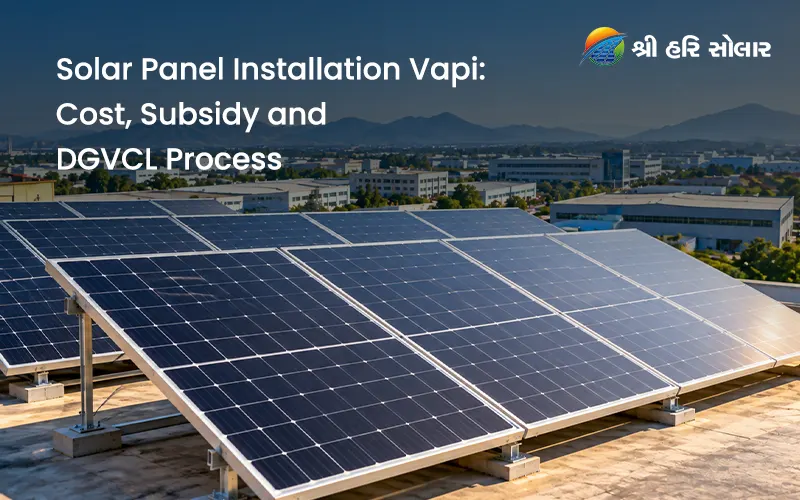
Vapi runs on electricity. Its homes run ACs through long summers, and its GIDC units run machines all day. That makes solar panel installation in Vapi one of the most direct ways to cut a rising bill, for families and factory owners alike. But the details matter here more than in most towns. Vapi sits on the Gujarat border, next to Daman and Silvassa, where different rules apply. This guide covers what a system costs in Vapi in 2026, how the PM Surya Ghar subsidy and DGVCL process work, and what GIDC units should plan for. It also explains how to keep panels productive in Vapi’s industrial dust.
Why Solar Makes Sense in Vapi
Vapi gets strong sun for most of the year, from October through May. A well-placed rooftop system here makes roughly 4 units per kW per day on average. Homes use the most electricity in the hot months, which is also when panels produce the most. For GIDC units, the match is even better, since machines run in daylight when solar output peaks. Business tariffs are higher than home tariffs, so every solar unit saves more money for a factory. Vapi is served by DGVCL, the South Gujarat DISCOM, so net metering and the PM Surya Ghar process follow Gujarat rules. Neighbouring families have already shown the way. In one Vapi township, residents added systems from 6 to 20 kW after seeing a neighbour’s bills fall to zero.
Solar Panel Installation Cost in Vapi (2026)
The cost of a home system in Vapi depends on its size, the panel and inverter brands, and your roof. A raised structure to clear a water tank, long cable runs or a metal roof can all add to the price. The table below gives indicative ranges for 2026, before and after the PM Surya Ghar subsidy. They are based on the ₹50,000 to ₹70,000 per kW range we see for typical home systems, and larger systems often cost a little less per kW. Treat these as a starting point, not a quote. A site visit is the only way to get an exact figure for your roof.
| System size | Suits monthly use of (approx.) | Indicative price before subsidy | PM Surya Ghar subsidy | Indicative cost after subsidy |
|---|---|---|---|---|
| 2 kW | Up to 240 units | ₹1.0 to 1.4 lakh | ₹60,000 | ₹40,000 to ₹80,000 |
| 3 kW | 240 to 360 units | ₹1.5 to 2.1 lakh | ₹78,000 | ₹72,000 to ₹1.32 lakh |
| 5 kW | 360 to 600 units | ₹2.5 to 3.5 lakh | ₹78,000 | ₹1.72 to 2.72 lakh |
| 10 kW | 600 to 1,200 units | ₹5.0 to 7.0 lakh | ₹78,000 | ₹4.22 to 6.22 lakh |
Ranges assume DCR panels, which the subsidy requires, so always confirm the GST amount on the written quote. Business systems do not get the PM Surya Ghar subsidy, so they are priced separately after a load study. Use our solar quotation checklist to compare the quotes you receive line by line.
PM Surya Ghar Subsidy for Vapi Homes
The PM Surya Ghar subsidy is a central scheme, so the amount is the same in Vapi as in Surat or anywhere else in India. Homes get ₹30,000 per kW for the first 2 kW, plus ₹18,000 for the third kW, up to a cap of ₹78,000. Be wary of anyone offering a bigger “special Vapi subsidy,” as no such scheme exists. To qualify, you need a home DGVCL connection in your own name and DCR panels listed on ALMM. A registered vendor must install the system, and you must not have taken a rooftop subsidy before. The money is paid into your bank account after the system is commissioned, so you pay the full price first. Our PM Surya Ghar subsidy guide covers eligibility, documents and common mistakes in detail.
The DGVCL Process in Vapi, Step by Step
For Vapi homes, the process runs through the national portal and DGVCL. Your registered vendor can handle most of it, but it helps to know each stage:
- Site survey: The installer checks your roof, shade, bills and sanctioned load.
- Portal registration: You or your vendor register on the PM Surya Ghar portal, choosing Gujarat and DGVCL.
- Application: The rooftop solar form is filled with your consumer number, system size and documents.
- Feasibility approval: DGVCL checks your connection and the local transformer. Nothing should be installed before this approval.
- Installation: The vendor fits the structure, panels, inverter, wiring and earthing, usually in one to two days.
- Net meter request: The vendor uploads installation details and applies for the net meter.
- Inspection and net meter: DGVCL inspects the system and fits a two-way net meter.
- Commissioning and subsidy: The commissioning certificate is issued on the portal, and the subsidy claim follows.
There is no fixed timeline for the whole process, since it depends on DGVCL’s workload and how complete your papers are. You can track each stage by logging in to the portal yourself.
Vapi vs Daman and Silvassa: Different Rules
Many families and businesses in the Vapi area live or work across the border in Daman or Silvassa. These are not part of Gujarat, so DGVCL does not serve them. Since April 2022, electricity in the Union Territory of Dadra and Nagar Haveli and Daman and Diu has been supplied by DNHDD Power Distribution Corporation, a company in which Torrent Power holds 51%. That means the DISCOM, the net metering rules and some steps of the application are different. The PM Surya Ghar subsidy itself is central and still applies to homes there. The Union Territory has been actively promoting the scheme, and Diu already meets its full daytime electricity needs from solar. Check the company name on your bill before you apply, and pick the matching DISCOM on the portal. Be cautious of any installer who quotes one process for Vapi, Daman and Silvassa alike.
Rooftop Solar for Vapi GIDC Units
Vapi GIDC is home to many chemical, pharma, paper and engineering units, and most of them run heavy loads in daylight. That makes industrial solar solutions one of the fastest ways for a unit to cut its electricity bill. A factory system is planned differently from a home system, so expect a deeper study before any quote.
What a Good Factory Study Covers
- Load pattern: Your daily and monthly use, peak hours and contract demand, so the system covers your daytime load without waste.
- Roof strength: Most GIDC sheds have metal roofs. The installer should check the roof’s age, sheet condition and load capacity before fixing anything.
- Mounting method: Metal roofs need clamps or rails that do not puncture the sheets, or fixings that are sealed properly.
- Metering option: Business connections follow different rules from homes, so ask which metering arrangement applies to your unit under current Gujarat policy.
Corrosion and Air Quality
Vapi’s chemical estate brings a challenge most towns do not have: corrosive gases and heavy dust. Choose panels tested for harsh conditions, such as salt-mist (IEC 61701) and ammonia resistance (IEC 62716). Ask for well-galvanized or aluminium structures, and good-quality cable glands and junction boxes. These details cost a little more upfront but protect output for 25 years.
Tax Benefits
Businesses do not get the PM Surya Ghar subsidy, but many can claim accelerated depreciation on solar assets. Check how this applies to your unit with your CA before you plan around it. Learn more on our industrial solar and commercial solar pages.
Common Vapi Roof Types and What They Need
Vapi has a mix of bungalows, apartment blocks and industrial sheds, and each needs a slightly different setup:
- Bungalows and row houses with flat RCC roofs: The easiest roofs to work on. A standard or slightly raised frame works well, with sealed anchor points against monsoon leaks.
- Homes with water tanks or staircase rooms: Shade from these can cut output in the morning or evening. A raised frame or careful panel placement helps, along with half-cut cell panels.
- Apartments with shared terraces: You need a society NOC and an agreed share of roof space. Societies can also add solar to the common meter for lifts and pumps.
- Industrial metal sheds: These need a structural check, non-penetrating clamps or properly sealed fixings, and corrosion-resistant parts.
For help picking panels for your roof, read our guide on which solar panels suit a home. Most of its advice applies equally in Vapi.
Keeping Panels Productive in Vapi’s Industrial Dust
Dust is the main reason Vapi panels lose output, more than clouds. Fine dust from industry, traffic and construction settles fast, especially in the dry months. A study at IIT Gandhinagar measured an output loss of about 0.37% per day from dust in Gujarat, and found that light rain and humidity made build-up worse. Near GIDC, sticky residue can be harder to remove than plain dust. Rinse panels gently every one to two weeks in the dry season, using soft tools and low-TDS water. Watch your inverter app, and clean when daily units drop by 5 to 10% on clear days. Never use a pressure washer or strong chemicals, as they can damage the glass coating and void the warranty. Our step-by-step guide on how to clean solar panels at home covers the full routine.
How Shree Hari Solar Serves Vapi
Shree Hari Solar is a solar EPC service company based in Surat, serving homes and businesses across South Gujarat since 2018, including Vapi and Valsad. We are a registered PM Surya Ghar vendor and handle the full DGVCL and portal process for home customers. As authorized distributors for Adani and Waaree, we supply genuine DCR panels with full manufacturer warranty. Our team plans each system from a site survey of your roof and bills, not from guesswork. For factories, we study your load and roof before suggesting a size or design. See our full solar company in Vapi page for services and contact details.
Ready to Go Solar in Vapi?
Solar makes strong sense in Vapi, for families with high summer bills and for GIDC units with heavy daytime loads. Homes can claim up to ₹78,000 under PM Surya Ghar, with DGVCL handling approval and net metering. If your connection is in Daman or Silvassa, check your DISCOM first, as the process differs. Factories should insist on a proper load and roof study, and on parts built for Vapi’s harsher air. Keep your panels clean in the dry months, and your system will keep paying you back for decades.
Planning solar panel installation in Vapi for your home or factory? Visit our solar company in Vapi page, call +91 70415 82232, or book a free consultation for a site visit.
FAQs
How much does solar panel installation cost in Vapi?
A 3 kW home system in Vapi typically costs around ₹1.5 to 2.1 lakh before subsidy. After the ₹78,000 PM Surya Ghar subsidy, the net cost falls to roughly ₹72,000 to ₹1.32 lakh. The exact price depends on panel brand, structure height and your roof. A site visit gives you a firm figure.
Is the solar subsidy different in Vapi?
No, the PM Surya Ghar subsidy is a central scheme and is the same across India. Homes get up to ₹78,000 for systems of 3 kW or more. There is no special extra subsidy for Vapi. Be careful of anyone who claims otherwise.
Which DISCOM handles solar in Vapi?
Vapi is served by DGVCL, the South Gujarat DISCOM. DGVCL handles feasibility, inspection and the net meter for Vapi homes. Nearby Daman and Silvassa are served by a different company, the DNHDD Power Distribution Corporation. Always check the company name on your bill before applying.
Can factories in Vapi GIDC get a solar subsidy?
Factories do not get the PM Surya Ghar subsidy, which is only for homes. However, many businesses can claim accelerated depreciation on solar assets. Daytime industrial use also means high savings per unit. Ask your CA how the tax benefit applies to your unit.
How often should solar panels be cleaned in Vapi?
In the dry months, rinse panels every one to two weeks, more often near busy industrial areas. Use soft tools and low-TDS water, early in the morning. Monsoon rain handles much of the cleaning from June to September. Clean when your daily units drop noticeably on clear days.
Can I install solar if I live in Daman or Silvassa?
Yes, but the process is different from Vapi’s. Daman and Silvassa are in a Union Territory, so DGVCL does not serve them. You apply through the same national portal but choose the Union Territory’s DISCOM instead. The PM Surya Ghar subsidy still applies to homes there.