Electricity is a regular household expense, and as your electricity use increases, monthly bills can rise with it. At the same time, many homes have unused rooftop space that can be used to generate electricity.
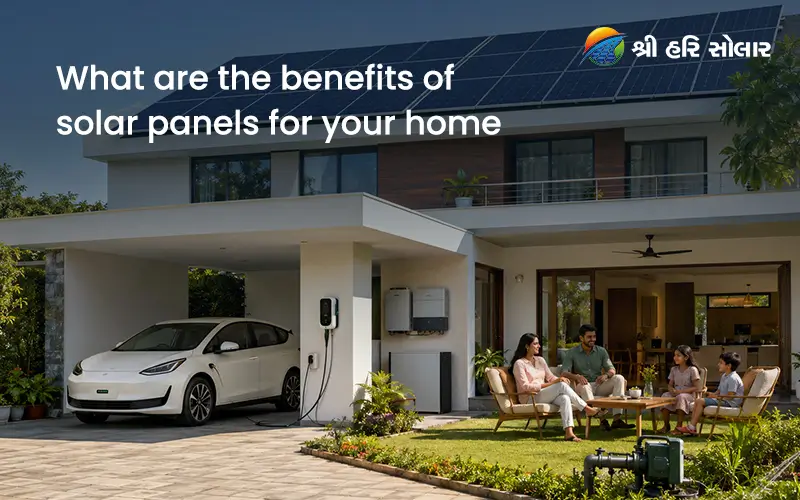
A residential rooftop solar system allows you to produce electricity from sunlight and use it for your home’s daily needs. The benefits of solar panels for your home go beyond monthly savings. Solar can reduce your dependence on grid electricity, make better use of your rooftop and provide long-term value.
At Shree Hari Solar, we help homeowners choose a solar system based on their electricity needs, rooftop space and budget.
What Are the Benefits of Solar Panels for Your Home?
The actual benefits you receive from solar depend on your electricity consumption, system size and rooftop conditions. For a suitable home, these are some of the most practical advantages.
1. Lower Your Monthly Electricity Bills
For most homeowners, this is the biggest reason to go solar.
During the day, your solar panels generate electricity that can be used by appliances in your home. This reduces the amount of electricity you need to draw from the grid.
So, how much can solar panels reduce electricity bills? There is no fixed answer for every home. Your savings depend on electricity consumption, solar system size, generation, tariff and the applicable net-metering arrangement.
A properly sized system can help you get more meaningful savings without installing more capacity than your home actually needs.
2. Protect Yourself From Rising Electricity Costs
Grid electricity prices can change over time. When you generate part of your electricity from solar, you need to purchase less electricity from the grid. This means future tariff increases may have less impact on your household electricity expenses.
Solar cannot control electricity prices, but it can reduce how dependent your home is on them.
3. Get More Value From Your Rooftop
Your rooftop can do more than cover your home.
Installing rooftop solar turns available roof space into an area that generates useful electricity without requiring additional land.
The rooftop solar benefits depend on usable roof area, sunlight, roof condition and shading from nearby trees or buildings.
4. Reduce the Upfront Cost With Government Subsidy
The initial investment is often one of the biggest concerns for homeowners considering solar.
Under the PM Surya Ghar: Muft Bijli Yojana, eligible residential consumers can receive Central Financial Assistance for qualifying grid-connected rooftop solar installations, subject to current eligibility criteria and scheme requirements.
The PM Surya Ghar subsidy can reduce the amount an eligible homeowner needs to pay toward the installation.
Because subsidy rules and eligibility requirements matter, they should be checked before finalising the solar system.
5. Build Long-Term Savings From Your Solar Investment
The financial benefits of solar panels are not limited to one month’s electricity bill.
Once installed, the system continues generating electricity over the years. Each unit of solar electricity used at home can reduce the amount of grid electricity you need to purchase.
How much you save over time depends on the system cost, electricity consumption, solar generation, tariff and any applicable subsidy.
6. Depend Less on Grid Electricity
Without solar, most grid-connected homes depend on the electricity network for nearly all their power.
Solar allows you to generate part of that electricity on your own rooftop.
This provides a degree of energy independence with solar panels, although a normal on-grid solar system still remains connected to and dependent on the grid.
If backup during power cuts is important, a suitable hybrid or battery-based system needs to be considered.
7. Make the Most of Your Daytime Electricity Use
Solar panels generate electricity during daylight hours, which can be especially useful for homes that consume significant power during the day.
Fans, air conditioners, refrigerators, washing machines, water pumps and other appliances can use electricity while the solar system is generating.
This can help a household make better use of the electricity produced directly on its rooftop.
8. Enjoy Low-Maintenance Electricity Generation
Solar panels generally require relatively little routine maintenance.
Keeping the panels reasonably clean helps sunlight reach them properly. System performance should also be monitored, with inspection or servicing arranged when required.
Good installation quality is equally important because a well-designed system is easier to operate and maintain over time.
9. Reduce Your Home’s Environmental Impact
The advantages of solar energy are not only financial.
Rooftop solar allows your home to use more renewable electricity and reduces reliance on electricity produced from conventional fossil-fuel sources.
For homeowners looking to reduce the environmental impact of their household electricity use over the long term, generating renewable electricity directly on the roof is a practical step.
10. Make Your Home More Energy-Ready for the Future
Household electricity needs can change.
You may add more air conditioning, appliances, water pumps or even an electric vehicle in the future. A properly planned solar system can become part of how your home manages these growing electricity needs.
The system should still be sized around realistic consumption rather than simply installing the maximum capacity possible.
Which Homes Benefit Most From Solar Panels?
The benefits of solar panels for home in India can vary considerably from one property to another. Solar is generally more suitable when a home has:
- Regular electricity consumption
- Good sunlight on the rooftop
- Limited shade from trees or nearby buildings
- Enough usable roof space
- Meaningful daytime electricity use
Before choosing a residential solar system, review your electricity bills and available rooftop space together. This helps determine the right system size and whether solar makes financial sense for your home.
Conclusion
The main benefits of solar panels for your home are lower electricity costs, long-term savings, reduced grid dependence and better use of available rooftop space.
The results, however, depend on choosing the right system for your electricity needs and property. Shree Hari Solar can assess your rooftop and power consumption to help you choose a residential solar system that makes practical and financial sense for your home.
FAQs
How much can solar panels reduce a home electricity bill?
Savings depend on your electricity use, solar system size, generation, tariff and net-metering arrangement. There is no single percentage that applies to every home.
Are solar panels worth installing for a home?
They can be a good long-term investment for homes with regular electricity consumption, suitable rooftop space and good sunlight.
Can homeowners get a subsidy for rooftop solar?
Eligible residential consumers can receive Central Financial Assistance under the PM Surya Ghar scheme, subject to the current eligibility and scheme requirements.
Do solar panels work during a power cut?
A standard on-grid solar system normally shuts down during a grid outage for safety. Backup requires a suitable hybrid or battery-based solar system.
How long does it take to recover the cost of home solar?
The payback period varies according to system cost, electricity consumption, solar generation, tariff and applicable subsidy. It should be calculated for the individual home rather than using one fixed period.