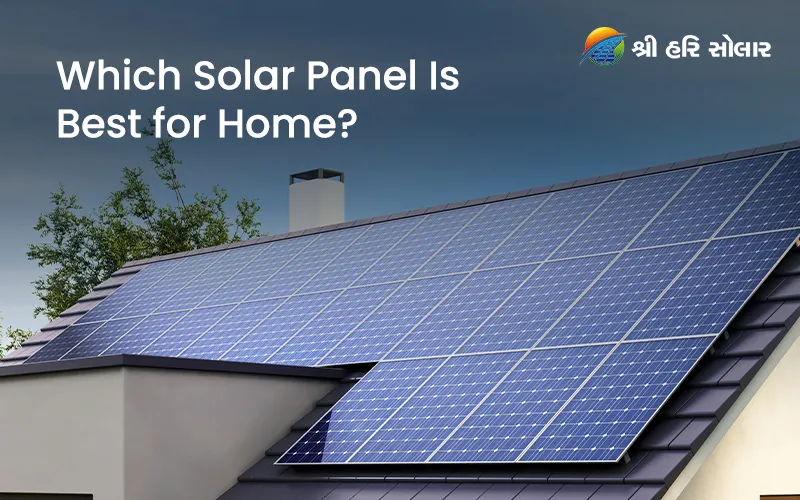
Deciding to switch to solar energy is a big step. It helps you save money on bills and is great for the earth. But when you start looking, you might feel confused by all the options. You might ask, “Which solar panel is best for home?” This guide will help you understand the different types so you can pick the right one for your house.
Choosing a solar panel for home doesn’t have to be hard. Most people want something that lasts a long time and gives them the most power for their money. We will look at what makes a panel good and why some are better for small roofs while others are better for big budgets.
Which type of solar panel is best for home use?
There are three main kinds of solar panels you will see. Each one is made differently and works in its own way. Knowing the difference is the first step in finding the best solar panel for home.
Monocrystalline Solar Panels
These panels are often called the “premium” choice. They are made from a single, pure crystal of silicon. You can recognize them because they are usually black and have rounded edges. They are very efficient, which means they can turn a lot of sunlight into electricity even in a small space.
Because they are high quality, they often cost a bit more. However, they usually last the longest and look very sleek on a roof. If you have a small roof and want the most power possible, these are usually the top pick.
Polycrystalline Solar Panels
Polycrystalline panels are manufactured using multiple silicon fragments. They have a blue, marbled look and square edges. These were very popular for a long time because they are cheaper to make.
While they are affordable, they are a little less efficient than the black ones. This means you might need more panels to get the same amount of power. They are a great choice for people who have a lot of roof space and want to save money upfront.
When looking for the best solar panels for home in india, many families choose these to balance cost and performance.
Thin-Film Solar Panels
Thin-film panels weigh less and are more flexible than traditional solar panels. They are often used in commercial buildings or unique setups where flexibility matters.
They are not usually used for homes because they take up a lot of space to produce a small amount of power. However, they work well on sheds or curved surfaces where heavy panels won’t fit. For most standard houses, they aren’t the primary choice.
Monocrystalline vs Polycrystalline vs Thin-Film
| Feature | Monocrystalline | Polycrystalline | Thin-Film |
|---|---|---|---|
| Efficiency | High (20-25%) | Medium (18–21%) | Low (17–19%) |
| Cost | Higher | Lower | Lowest |
| Lifespan | 25–30+ years | 20–25 years | 10–20 years |
| Space Needed | Small | Moderate | Large |
| Best Use | Small roofs, maximum energy output | Budget-friendly home projects | Portable systems, sheds, and large open spaces |
Factors to Look for in a Home Solar Panel
When you pick a solar panel for home, don’t just look at the price. There are five big things to check:
Roof Space and Energy Needs: How much power does your family use? If you use a lot of electricity but have a tiny roof, you need high-efficiency panels. If you have a massive roof, you can use cheaper, less efficient panels and just install more of them.
Efficiency Rating: A higher efficiency rating means the panel converts more sunlight into electricity. If your roof area is limited, picking a higher-efficiency panel makes better use of the available space.
Temperature Coefficient: Solar panels actually like to stay cool. This rating tells you how much the panel’s power drops when it gets really hot outside. A lower number here is better because it means the panel stays strong in the heat.
Warranty (Product vs. Performance): This is very important.
A ‘Product Warranty’ covers defects in the panel itself.
A ‘Performance Warranty’ guarantees that the panel will still produce a certain amount of power (like 80%) after 25 years.
Look for at least 10-12 years on the product and 25 years on performance.
Degradation Rate: All panels lose a tiny bit of power every year. A high-quality panel only loses about 0.5% each year. This means after 20 years, it still works almost as well as new.
Advanced Tech
N-Type vs. P-Type Solar Cells
N-Type solar cells are newer and provide better performance with less efficiency loss over time. They also work well in high temperatures.
P-Type solar cells are more common and generally cost less, making them a popular choice for home installations.
TOPCon vs PERC Solar Panels
TOPCon technology is the latest development in solar panel manufacturing. It offers higher efficiency and better performance in various weather conditions.
PERC panels are still widely used because they balance performance and cost. However, homeowners seeking premium performance often choose TOPCon technology.
How to Choose the Best Solar Panel for Your Needs
To find the best solar panel for home, think about your specific goal:
Best for Maximum Efficiency
If your goal is to generate the most electricity from limited roof space, monocrystalline panels with modern TOPCon technology are a great choice.
Best for Budget-Conscious Homeowners
Polycrystalline panels provide reliable performance at a lower price, making them a good fit for families looking to cut electricity bills without a big upfront cost.
Best for Small Roofs
Homes with limited installation space gain from high-efficiency monocrystalline panels since they produce more power per square meter.
Best for Long-Term Performance
If you plan to stay in your home for many years, investing in N-Type monocrystalline panels with low degradation rates can offer great long-term value.
Common Mistakes to Avoid When Buying Solar Panels
- Choosing panels based only on the lowest price.
- Ignoring warranty coverage.
- Not checking panel efficiency.
- Buying without calculating household energy needs.
- Overlooking Solar installation quality.
- Selecting a panel that doesn’t suit your roof size.
- Not comparing multiple brands before making a decision.
Avoiding these mistakes will help you select the best solar panel for home while maximizing your return on investment.
Conclusion
Finding which type of solar panel is best for home use depends on your roof, your budget, and your power needs. For most people, Monocrystalline panels offer the best balance of looks, power, and long life.
If you are looking for the best solar panels for home in india, make sure to compare trusted brands like Shree Hari Solar with global ones to see which fits your budget best. Solar is a smart move that pays off for years to come. Start by getting a few quotes and looking at the warranty details to make your final choice.
FAQs
How Many Solar Panels Does Your Home Need?
The number of panels depends on your monthly electricity bill and how much sun your roof gets. Most average homes need between 15 and 25 panels to cover all their energy needs.
Are solar panels worth today?
Yes, they are more worth it than ever. The cost of panels has dropped a lot, and the technology has improved. Most systems pay for themselves in 5 to 8 years through lower energy bills.
Can I install solar panels myself?
While you can buy kits, it is usually better to hire a professional. Solar involves high-voltage electricity and roof work. A pro ensures it is safe and that your warranty stays valid.
What is the lifespan of a modern solar panel?
Most modern solar panels are designed to last 25 to 30 years. Many will continue to produce power even after 30 years, though at a slightly lower efficiency.
Which type of solar panel is best for a home?
Monocrystalline panels are generally considered the best for homes because they are space-efficient, look good, and last a long time. However, Polycrystalline is better for those on a tight budget with a large roof.
How much maintenance do solar panels require?
Solar panels require very little maintenance. Usually, cleaning them with water a few times a year to remove dust or leaves is enough to keep them running well.
Do solar panels work during cloudy weather?
Yes, they still work on cloudy days, but they produce less electricity than on sunny days. They can typically produce about 10% to 25% of their normal power when it is overcast.