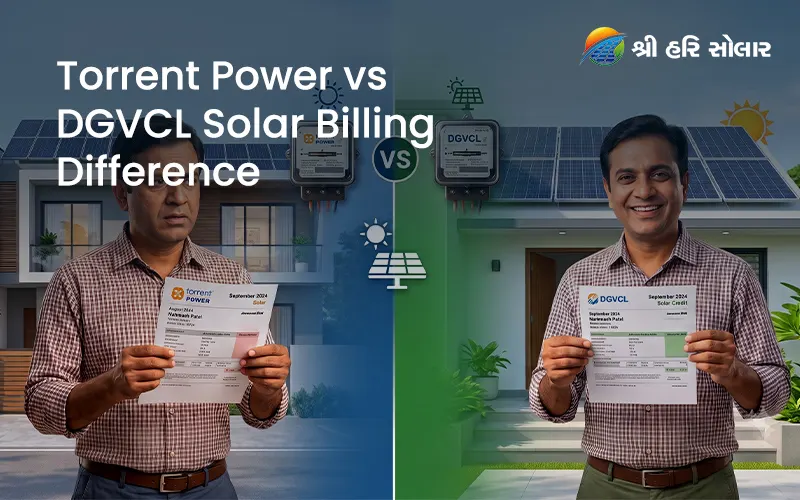
Are you looking at your roof and thinking about installing solar panels? If you live in Surat, you probably have one big question: how will my bill change? Choosing between Torrent Power vs DGVCL solar setups can be a bit confusing because they serve different parts of the city. While both companies help you save money, the way they handle your paperwork and monthly statements has some slight differences.
Surat is the solar capital of India, but your experience depends on who sends you the electricity bill. In this guide, we will break down the solar billing difference Surat residents face. We want to make sure you know exactly how your money is tracked and how you get paid for the extra power you send back to the grid.
Whether you are in the busy streets or the industrial zones of the outskirts, understanding these rules is the first step toward lower bills.
How Residential Solar Billing Works in Gujarat
Most residential rooftop solar systems in Gujarat operate through net metering. During the day, your solar panels supply electricity to your home. If your system generates more electricity than your home uses, the extra units go to the electricity grid.
At night or when solar production is low, you draw electricity from the grid.
At the end of the billing cycle, your electricity company calculates:
- Total electricity imported from the grid
- Total electricity exported to the grid
- Net electricity consumed
- Fixed charges and applicable taxes
This is how rooftop solar billing in Gujarat will work for most residential consumers in 2026.
Big Similarity (Net Metering & Buyback)
Before we look at the differences, let’s talk about what is the same. Both companies use Torrent Power vs DGVCL net metering rules. This means for every 1 unit you give to them, they give you 1 unit of credit to use later in the same month. This is a 1:1 ratio, which is the best deal for any homeowner.
Also, both companies follow the GERC (Gujarat Electricity Regulatory Commission) rules for buying back your extra power at the end of the year. No matter which company you have, you are helping the planet and your wallet. They both aim to make the transition to green energy as smooth as possible for families and small businesses alike.
Torrent Power Solar Billing
If you live in the main city areas like Adajan or Varachha, you likely use Torrent Power. Their system is very fast and digital. When you get a solar bill explanation Torrent Power provides, you will notice it is very detailed. They show exactly how many units you made and how many you used. Many people find their solar bill calculation Torrent Power Surat easy to read because it clearly subtracts your solar production from your total usage.
Another big plus is the speed of their service. When you apply for a new connection, the Torrent Power solar meter replacement usually happens very quickly, often within two weeks. They have a dedicated digital desk that handles everything online. This makes Torrent Power solar net metering a very hands-off experience for the homeowner. You just sign up, and they handle the tech side.
DGVCL Solar Billing
DGVCL mainly serves suburban areas, villages, and various industrial sites across South Gujarat.
The billing process is based on net metering, but the format of bills and online services may differ slightly from Torrent Power.
The DGVCL solar billing rules follow GERC regulations. Each billing cycle takes into account imported electricity, exported solar energy, fixed charges, and government-approved rates.
Homeowners planning a new installation should understand the DGVCL solar application process. This process includes submitting documents, getting technical approval, installing the meter, and final commissioning.
Many consumers complete their DGVCL solar rooftop application through the state-supported online portal before installation starts.
Excess Units & Surplus Settlement
Sometimes your solar system generates more electricity than your home uses over a longer settlement period. These extra units are called surplus units.
Both companies follow GERC guidelines for solar energy settlements.
Instead of getting the normal retail electricity price, surplus electricity is usually bought at the Average Power Purchase Cost (APPC).
The APPC rate from Torrent Power typically stays around the GERC-approved value for that year and is intended for surplus electricity settlement, not for monthly net adjustments.
Similarly, the DGVCL solar export rate is also based on the GERC-approved APPC method.
The settlement for excess units from Torrent Power follows the same regulatory framework, although the details of the settlement are in the company’s billing system.
Comparison: Torrent Power vs DGVCL
| Parameter | Torrent Power | DGVCL |
|---|---|---|
| Service Footprint | Urban core Surat (Adajan, Katargam, Varachha) | Outskirts, GIDC zones, rural South Gujarat |
| Application Portal | Dedicated Torrent Power Urban Digital Desk | State Integrated Solar Dashboard |
| Monthly Unit Offset | 1:1 Unit Adjustment | 1:1 Unit Adjustment |
| Year-End Surplus Rate | GERC-mandated APPC rate (~₹2.25 to ₹2.50/unit) | GERC-mandated APPC rate (~₹2.25 to ₹2.50/unit) |
| Avg. Meter Setup Time | 7 to 15 working days | 15 to 30 working days |
Key Billing Differences That Affect Your Savings
While the main rules are similar, there are a few small things that change your solar net metering Surat experience:
Base Slab Rates
The electricity tariff structure may vary based on the utility company. This can slightly impact your monthly savings after installing solar.
Application Portals
Torrent Power usually uses its own customer portal, while DGVCL customers access the Gujarat government’s integrated solar portal.
Fixed Charges
Both utilities charge fixed fees according to their approved tariff schedules. These fees remain even after you install rooftop solar because they are linked to maintaining your electricity connection.
Billing Cycle Differences
Billing dates, statement formats, and how adjustments are displayed can differ between the two companies. However, the overall calculation method follows GERC guidelines.
Which One is Better for Solar Owners in Surat?
When it comes to Torrent Power vs DGVCL Solar, there is no winner.
If you live in central Surat where Torrent Power is your electricity provider, it makes sense to stick to the billing system devised by Torrent Power.
On the other hand, if your property lies within DGVCL’s service area, then it is DGVCL that owns your solar connection.
In terms of savings, both power companies have adopted similar net metering rules set out by GERC. Your total savings in the end will depend on:
- Correct size of the equipment
- Good quality solar panels
- Proper installation
- Daily consumption of electricity
- Direction of your roof and sunlight availability
In reality, choosing the best solar panel for home and hiring a good solar installer usually brings much higher savings in the long run than the utility company does.
Conclusion
In the end, the Torrent Power vs DGVCL solar debate shows that both companies are great for going green. Torrent Power offers a slightly faster, more urban-focused digital experience. DGVCL provides a solid, state-backed system for everyone else. No matter which one you use, the savings from solar are real and will last for over 25 years.
If you are ready to stop paying high bills, now is the perfect time to start your solar journey!
Frequently Asked Questions
Can I choose between Torrent Power and DGVCL for my solar installation?
No, you cannot choose. Your provider depends on your physical address. If you live in the central city of Surat, you are likely with Torrent Power. If you are on the outskirts or in a rural area, you will be with DGVCL.
How does the solar bill calculation for Torrent Power in Surat differ from DGVCL?
The core calculation is the same (1:1 net metering). However, Torrent Power uses its own private billing software and digital portal, while DGVCL uses the Gujarat state government’s unified solar dashboard for tracking applications and credits.
What is the current DGVCL solar export rate and Torrent Power solar excess units settlement policy?
Both companies pay the GERC-mandated APPC rate for surplus units, which is usually between ₹2.25 and ₹2.50 per unit. This settlement happens once a year after the March billing cycle.
Is the DGVCL solar rooftop application process different from Torrent Power?
Yes. DGVCL requires applying through the Surya Gujarat state portal. Torrent Power has its own ‘Urban Digital Desk’ where they manage the entire application and approval process privately.
How long does the Torrent Power solar meter replacement take compared to DGVCL?
Torrent Power is generally faster, often completing the meter replacement in 7 to 15 days. DGVCL can take anywhere from 15 to 30 days depending on the availability of staff in your specific rural or industrial circle.
Do I get a separate torrent power solar panel subsidy?
No, there is no ‘separate’ subsidy. Both Torrent and DGVCL customers apply for the same National Portal subsidy (PM-Surya Ghar: Muft Bijli Yojana). The money is sent directly to the customer’s bank account after the system is verified.