Running a factory is expensive. One of the highest costs you face every month is the electricity bill. Large machines, heavy lighting, and cooling systems never stop. Many business owners now ask a big question: can industrial solar run a factory 24/7?
If you can stop paying the grid and use the sun instead, your profits would jump. But is it really possible to keep the machines humming when the sun goes down? The short answer is yes, but it takes more than just putting panels on the roof. With the right technology and planning, you can move your factory toward energy independence. So, Industrial solar is the smartest solution.
Let’s look at how this works and what you need to know to make it happen for your business.
Industrial Energy Demand
Factories differ from houses. A house uses a small amount of power for items like a fridge or a TV. In contrast, a factory requires a lot of power to operate heavy machines and production lines. This power demand is often steady. In many industries, machines run on three shifts, so they need electricity at both 2:00 PM and 2:00 AM. This consistent need for electricity is known as a “base load.”
When planning an industrial solar panel installation, you need to consider your highest power demand and your total daily electricity use. Most factories have heavy machines that require extra power when they start up. This means the solar system must be robust enough to manage these sudden spikes in power use.
Without careful planning, a typical solar system may not provide enough energy to keep everything running smoothly without relying on the local power grid.
Can Solar Alone Run a Factory 24/7?
Yes, a factory can operate on solar power around the clock, but only if it has a very large battery energy storage system (BESS) or a much larger solar plant than normal. This kind of fully off-grid solar setup is costly and hard to manage. That is why most factories opt for a hybrid solar system that works with the electricity grid.
Why It Is Hard to Run a Factory on Solar 24/7
- Solar can only produce power during the day: Solar panels generate energy only when the sun shines and do not work at night.
- Big storage is needed: To operate after sunset, a big battery system needs to be created to store extra solar energy.
- Powerful machines need more power: Many industrial machines require a lot of electricity at the moment of starting. The battery system must be powerful enough to handle these sudden power demands.
Key Technologies That Make 24/7 Industrial Solar Possible
To make solar work all night, we use three main tools. These technologies take solar from a daytime hobby to a full-time power plant for your business.
Industrial Net Metering & Banking
Net metering helps industries transfer extra energy to the power supply network, so they do not need to pay extra on their bills later.
Many industries also look into solar banking charges for industrial consumers in Gujarat before starting their projects. The banking policies and charges depend on current electricity rules and utility guidelines. Knowing these regulations helps businesses better estimate their actual savings.
Net metering is very beneficial for industries that use more electricity in the evening and at weekends.
Industrial Battery Energy Storage Systems (BESS)
If you want to be truly independent, you need batteries. A BESS stores the DC electricity produced by your panels. Modern lithium batteries are now strong enough to run big industrial loads.
While they add to the initial cost, they provide a backup if the grid goes down. This keeps your production line moving without any stops, saving you from losing money during power cuts.
Smart Energy Management Systems (EMS)
An EMS is like the brain of your factory’s power. it watches how much power your panels make and how much your machines need. It automatically decides when to use solar power, when to charge the batteries, and when to pull from the grid. This smart tech ensures you always use the cheapest power source first, which lowers your bills even more.
Cost & ROI Analysis
When looking at the solar cost, you have to think about the long term. A high-quality industrial system is a major investment. However, most factories in Gujarat see their money come back in just 3 to 5 years. After that, the electricity is basically free for the next 20 years. Solar panels usually have a warranty of 25 years, so the profit potential is huge.
The cost depends on the size of your roof and how many batteries you want. While the upfront price might seem high, the tax benefits (like accelerated depreciation) and the monthly savings make it one of the best investments a business can make. It is much better than paying a rising electricity bill every month forever.
Real Benefits of Industrial Solar for Factories
1. Lower Bills
An industrial solar system generates electricity on-site, reducing the amount of power a factory purchases from the grid. The actual savings depend on the system size, electricity consumption, local tariff, and available sunlight.
2. Long-Term Energy Savings
Generally, solar panels will continue to generate electricity for about 25 years or longer, but their generation may decline over time.
3. Uses Unused Rooftop Space
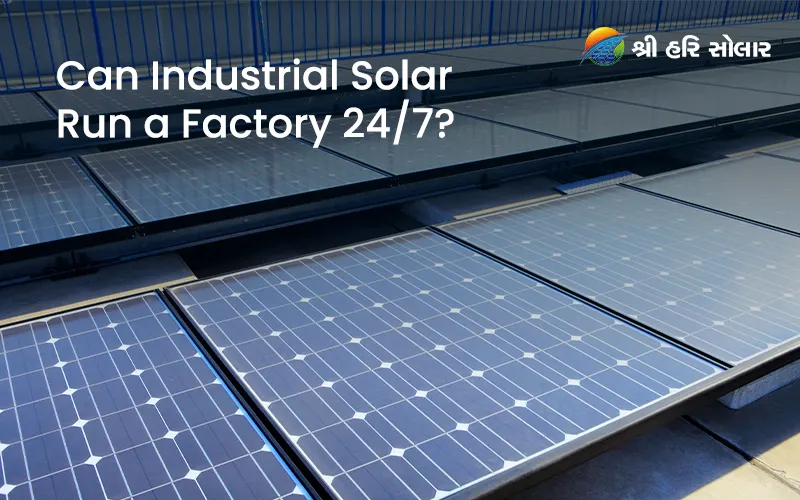
The rooftops of many factories are perfect for installing solar panels. This means that electricity can be generated without consuming any additional land area.
4. Reduces Carbon Emissions
Electricity is made using solar panels without creating any emissions in the process. If the electricity from solar panels replaces conventional power from the grid, then the factory can reduce its carbon footprint, depending on the power combination used.
5. Provides a Return on Investment (ROI)
Industrial solar installations can produce financial returns based on savings on electricity bills. The length of the return on investment depends on installation expenses, energy costs, energy usage and system efficiency, and public policies.
6. Improves Brand Reputation
Using solar energy can demonstrate a company’s commitment to sustainability. This may improve its reputation with customers, investors, and business partners who value environmentally responsible practices.
7. Requires Low Maintenance
Industrial solar installations have no parts that move in the solar panels, so maintenance activities typically consist of cleaning the equipment, inspecting it, and servicing the inverter from time to time.
Challenges and Solutions for 24/7 Operation
The main challenge is space. Some factories have small roofs but very high power needs. In these cases, you might need high-efficiency panels. Another challenge is the weather; on cloudy days, solar production drops. The solution is to have a hybrid system. A hybrid system stays connected to the grid while using solar and batteries. This ensures you never run out of power, no matter what the weather looks like.
Best Industrial Solar Solutions for Surat & Gujarat Factories
Surat is a hub for textiles and diamonds. These industries need reliable power. For industrial solar panel installation in Surat, companies should look for local experts who understand the local grid rules. Gujarat has some of the most solar-friendly policies in India, but the paperwork can be tricky. Working with a local team ensures that your net metering and banking are set up correctly from day one.
Shree Hari Solar: Best Industrial Solar Company
If you are looking for a reliable partner, Shree Hari Solar is a top choice for industrial projects. They provide a full solar installation service that covers everything from site survey to final connection. They understand the specific needs of Gujarat’s industrial zones. Whether you need a massive rooftop array or the best solar panel for home use for your staff quarters, they have the expertise to deliver high-performance systems that last.
Conclusion
So, can solar power run a factory 24/7? Yes, it absolutely can. By combining a professional industrial solar panel installation with battery storage or smart grid banking, you can power your machines day and night. While the solar price requires an initial spend, the return on investment is guaranteed. It is time to turn your empty roof into a power plant. Contact a trusted expert like Shree Hari Solar today to start your journey toward zero electricity bills.
FAQs
Can solar power run a factory at night?
Yes, solar can power a factory at night if you use a Battery Energy Storage System (BESS) or utilize net metering. With batteries, you store energy during the day to use at night. With net metering, you send extra day power to the grid and take it back at night.
How much solar capacity is needed for a small/medium factory?
It depends on your monthly bill. Usually, a 100kW to 500kW system is common for medium factories. A professional will look at your “connected load” and your daily unit consumption to give you an exact size.
What is the cost of industrial solar installation in Gujarat?
The cost varies based on the components used. Generally, it ranges from ₹35,000 to ₹45,000 per kilowatt for large systems. Adding batteries will increase this cost but provides more independence.
Are there government subsidies for industrial solar in 2026?
Direct cash subsidies are usually for homes. However, industrial consumers get “Accelerated Depreciation” and tax benefits. This allows businesses to write off the investment faster and save on income tax.
How long does it take to get ROI on industrial solar with battery?
With current electricity rates, most factories see a Return on Investment (ROI) in 4 to 6 years. Without batteries, the ROI is even faster, often around 3 years, because the initial cost is lower.
Is net metering beneficial for 24/7 factories?
Yes, it is very beneficial. It allows you to use the grid as a free or low-cost storage system. Even with solar banking charges for industrial consumers Gujarat, it is often cheaper than buying batteries for the whole night load.